


Behind the scenes, the digital world is undergoing a major structural change. While much of the public conversation focuses on consumer-facing generative AI tools, automation and machine learning are also reshaping the core systems that keep web platforms running.
Deep inside modern data centers, advanced orchestration layers are changing the rules for system architecture, performance, and scalability.
Monitoring servers only when they go down and setting them up by hand is no longer enough for many modern hosting environments. These days, machine learning systems, autoscaling tools, and algorithmic resource managers increasingly help with tasks such as predicting hardware problems, balancing traffic, and detecting attacks in real time.
AI Is Quietly Revolutionizing Online Hosting Infrastructure is not just a small improvement; this change is a big step forward in how digital platforms are driven, kept safe, and expanded for long-term growth.
The shift from a reactive administration to algorithmic autonomy
In the past, web platforms often needed a lot of regular human input to be managed. System administrators spent a lot of time setting up load balancers, adjusting caching policies, and responding to sudden traffic spikes that threatened to bring applications down.
Modern infrastructure relies heavily on automation, which has transformed what used to be a manual setup into continuous, software-driven optimization.
At the network edge, modern machine learning frameworks can analyze large volumes of telemetry data. Instead of waiting for a server’s memory pool to fill up or a processor to slow down, predictive resource models can use historical load patterns to forecast demand and scale capacity before traffic peaks.
This change makes it possible for the base virtual environments to grow with less manual intervention and fewer service interruptions, when the systems are designed and governed well.
Operational blueprints for autonomous scaling
A well-thought-out plan is needed to move from manual resource provisioning to an intelligent, automated structure. By following these practical configuration steps, server administrators can successfully bring their environments up to date:
Establish baseline telemetry streams
Phase 1: Foundation
Deploy granular monitoring agents throughout your environment to get real-time data on CPU, memory, and disk I/O. These data streams should be fed into a central time-series database so that your machine learning models can use a clean set of historical data to identify patterns.
Configure threshold-free anomaly detection
Phase 2: Modeling
Instead of fixed alerting limits, use adaptive anomaly-detection methods that adapt to your business’s cycles on their own. This change lets your monitoring platform know that a sudden rise in traffic at noon is normal, but the same rise at 3 a.m. is a sign of a serious system problem.
Implement isolated container orchestration
Phase 3: Integration
Move your monolithic web apps to modular container ecosystems that are run by smart scheduling engines. This structural separation allows autonomous scripts to spin up new application instances across your cluster quickly, without affecting adjacent system processes or shared resources.
Deploy closed-loop automated execution
Phase 4: Automation
By connecting your machine learning insights directly to your deployment pipelines, you can reduce manual work in infrastructure scaling. Before you add automated database sharding, start by automating low-risk operational tasks, such as clearing temporary disk caches or recycling idle worker pools.
Secure, Affordable, and Powerful Solutions.
VPS solutions are designed to deliver exceptional speed, security, and customization options.
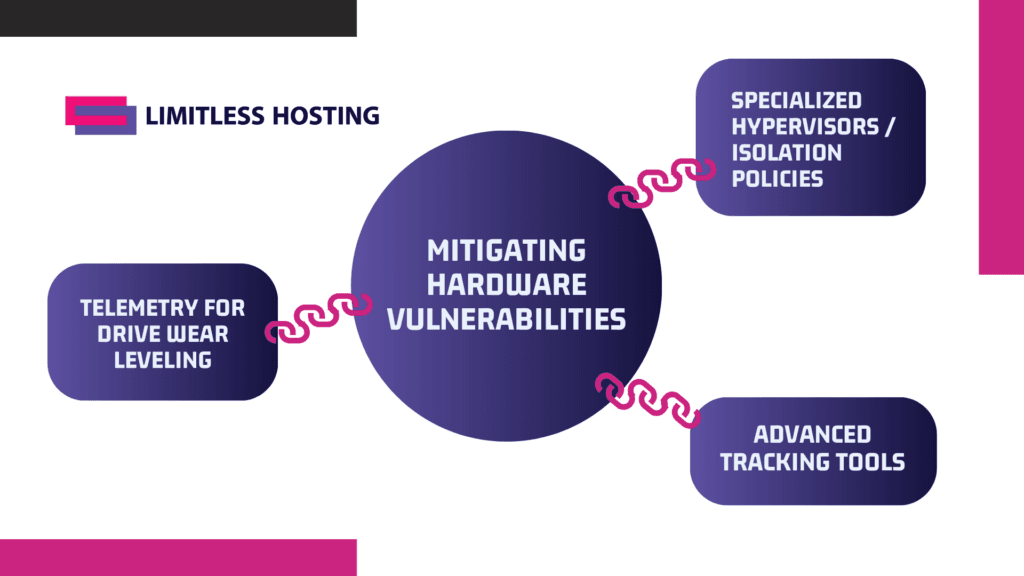
Mitigating hardware vulnerabilities through predictive analytics
Over time, physical server technology breaks down. In the old way of doing things, if a solid-state drive or memory module failed, the on-call technical team could be paged in the middle of the night for help. These days, predictive analytics systems can sometimes detect early warning signs of hardware failure before a part fails.
Hosting platforms can move live customer data off at-risk hardware by monitoring signals such as drive health metrics, read-write errors, temperature, and latency changes. This migration can occur behind the scenes, reducing the risk that end users will experience application failures during maintenance on physical machines.
Expert strategies for hardware optimization
To keep high availability, we need to move away from traditional scheduled maintenance and toward a model of active, continuous hardware optimization. To keep your host environment running properly, think about these tips from experts:
- Add telemetry for drive wear leveling directly to your deployment scripts. By getting live health data from solid-state storage arrays, smart deployment platforms can move heavy database workloads off older drives, helping your hardware last longer.
- Using advanced tracking tools, check how your platform’s resources are being used. Conducting a deep-dive study of your virtual clusters regularly can help you identify unused resources. This lets you improve performance while lowering your overall infrastructure spend. For example, developers can uncover hidden speed gains by using virtual private servers (VPS), container platforms, or managed cloud services optimized for containerized microservices and automated microtasks.
- Use specialized hypervisors or isolation policies to separate old database instances. If you keep your older backend software separate from your main high-performance web servers, localized resource leaks won’t slow down the whole platform.
The AI hosting automation frontier and the new cybersecurity paradigm
The threats we face today are far more complex than simple signature-based hacking attempts. Malicious bots and DDoS attacks can vary traffic patterns, payloads, and fingerprints to evade basic firewall rules. Modern data centers use a combination of rules, threat intelligence, rate limiting, and behavioral models to protect against these advanced threats.
These security layers do not rely only on static lists of known bad IP addresses. Instead, they can evaluate request behavior in real time, including request velocity, payload structure, and navigation patterns. If an endpoint starts scraping content or probing for database vulnerabilities, the system can stop the threat at the network edge. This helps keep applications safer and more responsive.
Incoming Network Traffic
↓
Edge Protection Layer (Rules, Threat Intelligence, and Real-Time Behavioral Analysis) | | – Evaluates request velocity, payload structure & navigation patterns
↓
| Normal Behavior | Anomalous Behavior |
| Internal Routing MeshLow-latency deliveryDirect access to resources | Instant Boundary BlockingIP isolated at the edgeThreat logged for analysis |
Technical blueprints for enhanced network security
To make web infrastructure safer, you need a strong defense system with many layers. Protect your digital assets from current web vulnerabilities by setting them up in this useful way:
- All internal communication channels should use dynamic, token-based authentication. If you replace static administrative passwords with cryptographic tokens that only last a short time, attackers won’t be able to move through your network if they get into one edge server.
- Set up web application firewalls that receive frequent managed rule and threat intelligence updates. Modern cloud defenses can use global threat intelligence networks to help stop newly observed attacks, including some zero-day exploitation attempts, before a public patch is available.
- Set up deep packet inspection where it is legally permitted, privacy-appropriate, and technically justified. Your edge security tools can stop malicious database queries before they reach your main storage layers by analyzing the structure of incoming requests.
Data science and the micro-targeting of infrastructure risks
When you put together data science, risk analysis, and infrastructure management, you can see how automated hosting systems have a bigger effect on the economy. Today’s distribution of resources doesn’t happen in a vacuum; it can affect user trust, financial access, and application delivery worldwide. Predictive systems need to find a balance between short-term operational performance and long-term system stability.
Modern financial platforms are a strong example of this balance because infrastructure availability can directly affect business access and service reliability.
A 2025 article in the Journal of Financial Stability argued that AI can amplify financial-system vulnerabilities through speed, opacity, common data, and strategic interactions. Separately, public-sector financial-stability research has warned that AI adoption in finance can create new risks around model concentration, data quality, governance, and explainability.
The broader lesson for hosting infrastructure is that automated systems should be auditable, tested for bias, and designed with clear human oversight. When automated platforms rely on biased or incomplete data, they can unintentionally create access barriers. This shows how important it is for infrastructure automation to remain transparent, fair, and easy to check.
Data Science Risk Matrix
Data Foundations (Historical or Sampling Bias) —-> Algorithmic Scoring (Predictive Models) —-> Access Impact (Service Quality and Digital Divides)
Data-science insights for sustainable platform design
Operators need to pay close attention to the connection between data inputs and automated system actions if they want to make fair and reliable web systems. These data science insights can help you plan the long-term development of your platform:
- To reduce algorithmic bias, you should regularly audit your training datasets. Making sure that your infrastructure automation software uses relevant technical data to measure server performance helps prevent accidental regional service gaps.
- For separate analytical testing, use zero-copy data forking. Your data science teams can test new automated management models without affecting live user traffic by making instant, lightweight copies of your live production settings.
- Set up clear observability frameworks for every decision that can be made autonomously. Keeping an accurate, tamper-resistant record of why an automated system shrank a cluster or flagged an account helps ensure that your platform can be audited and aligned with applicable privacy laws.
Intelligent resource provisioning and green data centers
Keeping track of how much energy data centers use has become increasingly difficult as the world’s need for computing grows rapidly. When backup computers are kept running at full capacity around the clock, traditional web hosting setups can waste a lot of power. Smart resource allocation in modern hosting settings can reduce some of this waste.
Advanced energy-management platforms look at historical energy use and workload demand to estimate when fewer resources are needed. During quiet times, the system can move virtual tasks to fewer physical servers. This makes it safer for hardware that isn’t being used to enter low-power states. This automatic tuning can reduce operational costs and help lower the carbon footprint of digital infrastructure, although the overall energy impact depends on workload growth, power sources, and data-center design.
- Traditional Data Centers: [Server 1: 20% Load] [Server 2: 15% Load] [Server 3: 10% Load] –> (3 servers consuming power below efficient utilization)
- Intelligent Consolidation: [Server 1: 45% Load] [Server 2: SLEEP ] [Server 3: SLEEP ] –> (some servers placed in low-power states when safe)
Actionable strategies for eco-friendly hosting
To get the most out of server power efficiency, you need to handle resources in a modern, cloud-native way. Use these practical tips to make your platform run more smoothly:
- Transition your primary digital assets to a highly scalable elastic hosting architecture. By using elastic cloud resources, you can help ensure that your apps use only the hardware power they need at a given time. This helps prevent servers from sitting idle and wasting power.
- Set up automated rules for the lifecycle of your object storage systems. By setting rules to automatically compress and archive older files that aren’t accessed very often, you can lower the amount of active storage hardware you need and save power in the data center.
- Measures of environmental efficiency should be built right into your technical review cycles. Keeping an eye on how well your platform uses power and how long it usually takes for apps to load can help your development team find and fix code that uses a lot of resources quickly.

Navigating the future of algorithmic infrastructure management
The skills that modern IT professionals need are changing because global hosting systems are becoming more automated. System administration used to be mostly about maintaining servers by hand, but now it increasingly includes data orchestration, system integration, infrastructure-as-code, security governance, and ethical automation.
It is important for technology workers who want to lead this change to have a deep understanding of basic algorithmic ideas. Software engineers can safely and successfully design the next generation of autonomous infrastructure frameworks by getting advanced, specialized technical training.
Educational blueprints for modern systems engineers
To have a successful career at the point where automation and infrastructure meet, you need to learn difficult technical subjects in a structured way. To learn how to use current cloud automation, follow these steps:
- Structured academic classes let you learn more about advanced machine learning methods. Learning predictive modeling well can teach you how to make infrastructure automation tools from scratch. For instance, engineers can use current guides to accredited AI master’s degrees, including the Research.com guide to accredited AI master’s degrees online, to compare university programs that cover machine learning, data systems, algorithms, and responsible AI.
- Take part in projects to build open-source cloud infrastructure. By contributing to community-driven orchestration tools, you can learn a lot about the deployment problems that global data centers face in the real world.
- Get well-known credentials in data governance and cloud architecture. Learn about security compliance frameworks, cloud management platforms, and container networking to make sure that your automatic systems are stable and safe.
Maximizing performance through intelligent caching architecture
Algorithmic resource management has changed modern content delivery networks, going beyond automated scaling and security. Static time-to-live values are used in traditional caching methods, which can lead servers to send out-of-date content or delete valuable assets from memory too soon.
Smart caching engines in modern web hosting frameworks can analyze content popularity, traffic patterns, and user behavior signals. If a website or media asset starts to gain attention, an edge network can preload or retain those files in selected data centers before a major traffic surge arrives. This proactive delivery helps keep application response times fast during busy periods.
User Interaction Signals (Traffic, Requests, Navigation Patterns) → Predictive Analysis → Edge Caching Engine (Preloads or Retains Likely High-Demand Assets) → Faster Asset Delivery (Reduced Origin Server Load)
Practical optimizations for content delivery
To give users fast experiences, you need to cache assets in a way that is adaptive and based on data. To make your content delivery pipelines work better, follow these technical tips:
- Smart purge triggers should be built into the process of your content management system. By automating API calls that clear certain edge caches when database records are changed, you can make sure that your users see up-to-date information without overusing server resources.
- To get the best network edge distribution, look over your global bandwidth metrics. By regularly looking at data transfer patterns, you can move important application assets closer to your core users. Engineers can read current web hosting bandwidth explainers to learn more about how bandwidth affects data limits and how to build delivery pipelines that are cost-effective and efficient.
- Use current, high-efficiency encoding algorithms to compress all of your website’s static assets. When files are compressed before they are cached, they take up less space on the network and load faster for mobile users around the world.
Read our latest posts:
- How Long Do Web Hosting Anniversary Discounts Last?
- Why Domain Monitoring Matters for Brand Protection
- Why Do People Attend CloudFest? 10 Reasons the Internet Infrastructure Community Shows Up
- What Is CloudFest? A Guide to the World’s Internet Infrastructure Event
- How Many Websites Can Shared Hosting Handle?